
Aire de Villars-les-Dombes
Photos d'illustration

Équipements et services
Description
Tourisme
Villars-les-Dombes (Ain, France)
Villars-les-Dombes is a village in the heart of the Dombes, a region of plains and ponds located in Auvergne‑Rhône‑Alpes. The village is mainly known for its significant natural heritage linked to the bodies of water that attract birds and anglers. People come for birdwatching, peaceful walks, and a local cuisine based on pond products. The atmosphere remains rural and is accessible by car from the Lyon metropolitan area.
Heritage and history
The village's buildings retain a rural appearance with some old stone houses and farms related to pond management. Local history is closely tied to the hydraulic management of the étangs de la Dombes, developed since the Middle Ages for fish farming. The landscapes bear witness to this long-standing economic role that is still alive today.
Nature and landscapes
The étangs de la Dombes form a network of bodies of water that support a rich diversity of birds. It is a flat territory punctuated by reed beds, dikes, and small roads that offer easy vantage points. The seasons strongly change the atmosphere: migrations in spring and autumn, which are prime times for observation.
Outdoor activities and leisure
The paths and small roads are well suited for walking or cycling. Fishing and wildlife discovery are common activities. Nearby, visitor facilities offer guided tours and nature outings suitable for families.
Gastronomy
Local cuisine highlights pond products: frog legs and pond fish are often on menus. There are also eateries offering simple regional cooking based on local products.
Not to miss
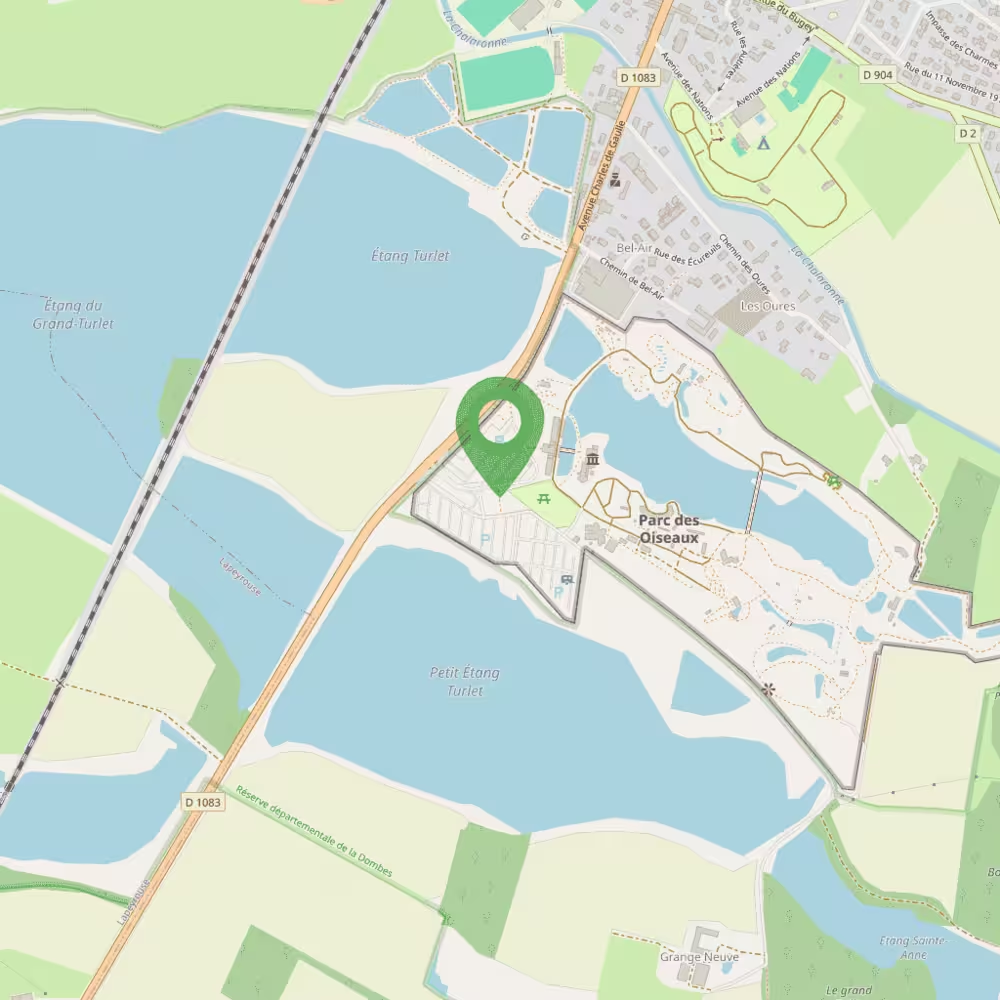
- Parc des Oiseaux — a major ornithological park showcasing many species in semi‑freedom.
- The étangs de la Dombes — a vast network of waters ideal for birdwatching and fishing.
- Bike rides — peaceful routes between dikes and marshes to discover the landscape.
- Local tables — restaurants serving pond fish and Dombes specialties.